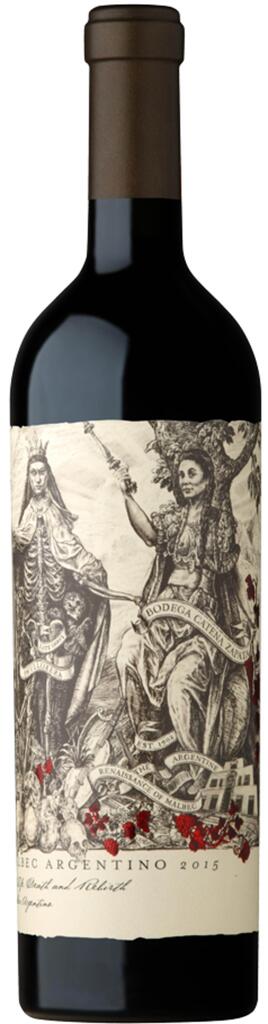
- La Pirámide Vineyard: 3,117 ft (950 m). Agrelo District, Luján de Cuyo Region, Mendoza, Argentina. Deep alluvial loam with 30% clay that decreases soil temperature by 35,6ºF (2ºC) in average. Cabernet Sauvignon.
- Domingo Vineyard: 3,675 ft (1,120 m). Villa Bastías District, Tupungato Region, Uco Valley, Mendoza, Argentina. Surface is completely covered with gravel. Alluvial topsoil is loamy with limestone deposits at 11,8 inches (30cm). Cabernet Sauvignon.
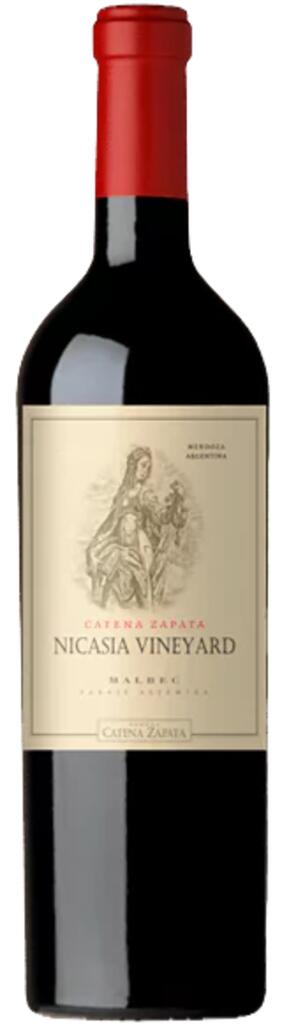
- Nicasia Vineyard: 3,593 ft (1,095 m). Altamira en La Consulta District, Uco Valley, Mendoza, Argentina. Very shallow loamy topsoil with surface gravel and gravelly (large stones) dry river bed subsoil - optimal drainage. Malbec.
- Adrianna Vineyard: 4,757 ft (1,450 m). Gualtallary District, Tupungato Region, Uco Valley, Mendoza, Argentina. Alluvial, gravelly with limestone deposits in the topsoil. Malbec.
The winter of 2004 was cold and dry, with little snow in the Andes mountains. Average temperatures throughout this season were much lower than normal, partly due to the lack of precipitation and low levels of relative humidity.
The high altitude wine country of Mendoza entered spring under similar climatic conditions. Lower than average temperatures and very dry conditions led to an excellent start to the growing season, with very good bud break and vegetative growth. The cooler temperatures throughout early spring led to a slightly later flowering, foretelling the possibility of a later harvest.
Mid spring saw a late frost on November 5th which touched the lower areas of the southern Uco Valley, especially the department of San Carlos.
Late spring witnessed a continuation in the trend of cooler than average temperatures. There were also some light rains during this period which affected the flowering process, leading to a lower than average fruit set. This phenomenon reduced the per plant production, lowering yields and potentially increasing quality.
Summer began with the early arrival of very cold nighttime temperatures. These very low January minimum temperatures led to a rapid and homogenous veraison, with almost all clusters changing color very quickly and uniformly. This color development foretold of the outstanding anthocyanin levels that would be achieved in the harvest of this year’s red varietals.
In addition, this period saw very few days above 34° C (93.2° F), an important threshold in Mendoza. Temperatures below this mark allow for the most efficient photosynthetic activity in the vines, leading to heightened polyphenolic accumulation and excellent malic acid retention in the grapes.
Late summer saw a slight increase in average temperatures. Increased cloudy weather meant that nighttime temperatures were not as low as usual, thereby lifting the overall average slightly. However, maximum temperatures during the day remained below 34° C (93.2° F), allowing the grapes to experience optimum ripening conditions.
More from this Producer
The area of Perdriel, some 20 kilometers to the south of the city of Mendoza, experienced a violent hail and thunderstorm on February 14. Many vineyards in the area lost their entire production for the 2005 harvest. In keeping with the isolated nature of these types of storms in Mendoza, Bodega Catena Zapata’s La Pirámide vineyard, which is located only 12 kilometers from Perdriel, did not even receive any precipitation that day.
Early fall experienced a notable decrease in temperatures throughout the high altitude wine country of Mendoza. Both the daytime maximums and nighttime minimums were significantly lower than the historic norms. While there were no days above the 34° C (93.2° F) mark, allowing for the retention of important aromatic components, nighttime temperatures also dipped low enough to minimize photorespiration, a plant activity which burns important malic acids.
There was some light precipitation around March 12. However all white grapes had already been harvested and the red varietals were left on the vines until this limited rainfall evaporated, leaving no detrimental effects.
Late fall, the final ripening stage for Mendoza’s highest altitude vineyards, had spectacular weather. Dry conditions were accompanied by lower than average temperatures, ideal circumstances for the grapes to reach their maximum level of physiological ripeness while retaining excellent freshness. Bodega Catena Zapata’s highest altitude vineyard, Adrianna, even saw some light snow in late April, during the last week of harvest, an unprecedented testimony to the unique mountain location of this site.
In general, the 2004 – 2005 growing season was characterized by significantly lower average temperatures. The lower daytime highs allowed the vines to continue their photosynthetic activity almost without interruption, resulting in heightened polyphenolic accumulation as well as flavor and aroma concentration. The unusually cold nighttime lows offered the opportunity for the vines to retain increased levels of natural acids, lending wonderful balance to the fruit as well as excellent freshness.
ADRIANNA VINEYARD - Gualtallary, Tupungato, Uco Valley, Mendoza, 4757 ft elevation
Located in the Gualtallary district of the Tupungato region at an altitude of 1450m (4757 ft) above sea level. This unique mountain vineyard showed almost extreme cool temperatures. Average temperatures in the important ripening window of 30 days prior to harvest were more than 1° C (1.8° F) cooler than normal. In addition, the thermal amplitudes were some 2° C (3.6° F) higher than normal, indicating very cold minimum nighttime temperatures during this period.
These very cold temperatures produced Chardonnay fruit with exceptional aromatic complexity of ripe white stone fruit with marked mineral notes. The grapes had excellent levels of natural acid, giving the wines a wonderful crispness and balance.
The Cabernet Sauvignon from Adrianna shows outstanding violet color with complex aromatics and rich concentrated black fruit flavors. The wine shows excellent structure and generous texture.
The Malbec from this area presents an opaque, blackish color with explosive floral aromatics of violets and black roses. The texture is soft and silky with ripe, sweet tannins.
LA PIRÁMIDE VINEYARD - Agrelo, Luján de Cuyo, Mendoza, 3117 ft elevation
Located in the Agrelo district of the Lujan de Cuyo region at an altitude of 950m (3117 ft) above sea level. Similar climatic conditions to Angelica were present in La Pirámide in 2005. The average February temperatures were slightly warmer due to slightly higher nighttime minimum temperatures. As in Angelica, there was only one day above 34° C (93.2° F) through this month. Maximum temperatures in March, during the final stages of ripeness, however, were 1° C (1.8° F) lower than normal.
The Cabernet Sauvignon harvested from this vineyard presents an outstanding purplish garnet color, much denser than in previous years. The aromatic structure shows increased intensity and complexity, with ripe cassis fruit mixed with notes of roasted pepper, mint and a touch of eucalyptus. The palate is full and concentrated while maintaining a soft, generous texture.
DOMINGO VINEYARD - Villa Bastías, Tupungato, Uco Valley, Mendoza, 3675 ft elevation
Located in the Villa Bastías district of the Tupungato region at an altitude of 1120m (3675 ft) above sea level. Following the tendency of the Uco Valley already touched on in Altamira in La Consulta, the Domingo Vineyard had February conditions in which average temperatures were 1° C (1,8° F) cooler than normal. Maximum daytime temperatures were much lower, with no day over the important 34° C (93.2° F) threshold. March temperatures continued on this trend, with both maximum and minimum temperatures lower than normal. The dry conditions allowed an excellent environment to finish the maturation process.
The Cabernet Sauvignon from this vineyard shows deep, dark purple color, with intense aromatic complexity, fresh ripe cassis and blackberry fruit intermingled with elements of mineral, cedar and tobacco. The finish is full and well structured, with soft, smooth tannins.
NICASIA VINEYARD - Altamira, Uco Valley, Mendoza, 3593 ft elevation
Located in the La Consulta district of the San Carlos region at an altitude of 1095m (3593 ft) elevation. This very southerly located vineyard site was affected by the late frost of November 5th, losing roughly 20% of total production. In March the average temperatures were also about 1° C (1.8° F) below normal, due to both lower maximum daytime and lower minimum nighttime temperatures. The vineyard received a light rainfall of 1.77” (45 mm) on March 12. However, given that this very cool climate vineyard does not begin harvest until mid April, the precipitation had no affect on fruit quality. Indeed within 10 days all of this rainfall had evaporated. The all important April conditions, the final moments of maturation, were ideal: dry weather with lower than usual temperatures.
The Malbec from this vineyard shows a deep dark violet color with black cherry aromas, a core of rich concentrated cassis fruit flavors, finishing with well structured, finely grained tannins. The Cabernet Sauvignon from Altamira in La Consulta presents the opaque violet color typical of this cool climate. The nose is ripe and complex, with blueberry and mineral notes, a full rich mouthfeel and excellent structure.
Bottling
Unfined and unfiltered.
Winemaking
De-stemmed, whole berry fruit is hand-loaded into 225-500
liter new French oak foudres for a 100% barrel fermentation
for a period of 18 days, allowing seamless oak integration.
The fermentation temperature is kept low, extracting intense
aromas, and the cap management is done by hand to ensure
soft, gentle flavors and tannin extraction. Wild yeasts.
Alcoholic and malolactic fermentation in barrel leaves
considerable lees and sediment.
Aging
The wine is aged in French
oak barrels for 24 months. 210 separate row
microvinifications from different lots and harvest times.